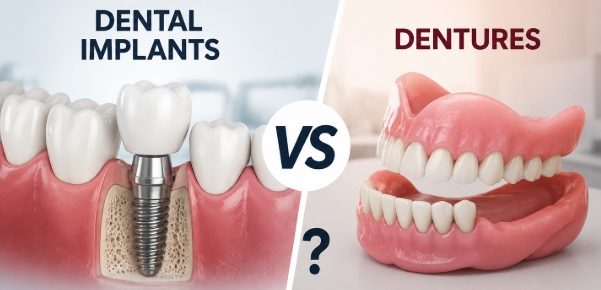
Overview of Missing Teeth Solutions
Missing teeth can affect your smile, speech, and eating habits. Many people look for the best tooth replacement options to restore their confidence and oral health. Today, dental implants and dentures are two popular missing teeth solutions. Both have their own benefits and drawbacks. However, choosing the right one depends on your needs and lifestyle. In this blog, we will compare dental implants vs dentures to help you make an informed choice.
What Are Dental Implants?
Dental implants are artificial tooth roots made of metal, usually titanium. Dentists place them into your jawbone through a small surgery. After healing, a crown (artificial tooth) is attached to the implant. This creates a strong and natural-looking tooth replacement.
Procedure
Pros of Dental Implants
Cons of Dental Implants
What Are Dentures?
Dentures are removable devices that replace missing teeth. They can replace a few teeth (partial dentures) or all teeth (full dentures). Dentures rest on your gums and are made from acrylic, metal, or plastic.
Types of Dentures
Pros of Dentures
Cons of Dentures
Factors to Consider When Choosing
When picking between dental implants and dentures, several factors matter. For example, cost, comfort, durability, maintenance, and appearance all play a role.
Additionally, your jawbone health and personal needs matter. Some people may not have enough bone for implants. In such cases, dentures may be better. Always discuss your options with a dental specialist.
Who Is a Good Candidate for Each Option?
Not everyone is suited for every missing teeth solution. Dental implants are best for people with healthy gums and enough jawbone. You should also be in good overall health. On the other hand, dentures are a good choice for those who want a non-surgical option or have weaker bone.
However, your dentist will check your mouth and health before recommending the best tooth replacement option.
Lifestyle Tips for Living With Dental Implants or Dentures
After getting dental implants or dentures, you may need to adjust your daily habits. For example, eat soft foods at first and avoid hard or sticky foods. With implants, brush and floss as you would with natural teeth. For dentures, remove them at night and clean them daily. Also, visit your dentist regularly for check-ups. These steps help keep your mouth healthy and your new teeth looking great.
Prevention of Tooth Loss
Preventing tooth loss is always better than treating it. You can protect your teeth by:
According to the CDC, good oral hygiene and regular dental visits lower your risk of tooth loss. Taking care of your teeth now can help you avoid needing dental implants or dentures later.
Conclusion
Both dental implants and dentures are effective missing teeth solutions. Each has its own pros and cons. While implants offer a long-lasting and natural feel, dentures provide a quick and less costly fix. However, the best tooth replacement option depends on your needs, health, and budget. Consult a dental specialist Dr. Gautham Hegde to determine the best choice for you.